
Understanding Council Tax Bands and Discounts in Scotland
Council tax is an unavoidable part of renting in Scotland, but it doesn’t have to be confusing.
Date:
26 February, 2026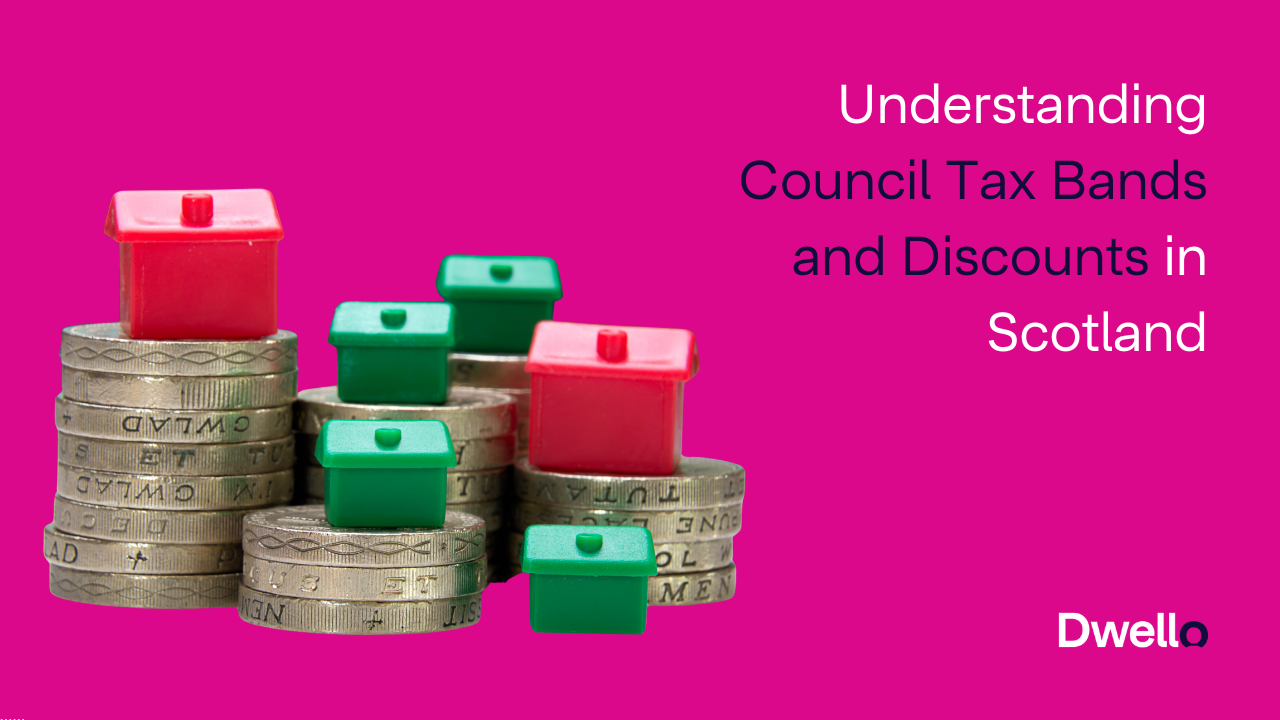
Council tax is one of those topics that every tenant hears about but not everyone fully understands. Whether you’re moving into your first rental or relocating across Scotland’s Central Belt, knowing how council tax works can help you budget confidently and avoid surprises.
This guide breaks down the essentials: what council tax is, how bands are set, who qualifies for discounts, and how to check your band before you sign a lease.
What Is Council Tax?
Council tax is a local charge collected by your local authority to fund essential services such as waste collection, schools, road maintenance, social care and community facilities. Every residential property in Scotland is assigned a council tax band and the amount you pay depends on that band and the local authority area you live in.
If you’re renting, council tax is usually your responsibility, unless your tenancy agreement specifically states that the landlord covers it.
How Council Tax Bands Work
Every property in Scotland is placed into one of eight bands, from A (lowest) to H (highest). These bands are based on the property’s estimated market value as of 1 April 1991, regardless of its current value.
Here’s a quick overview:
- Band A – lowest value properties
- Band D – average value
- Band H – highest value properties
Because the Central Belt includes a wide range of property types – from Glasgow tenements to modern Edinburgh flats and suburban homes in Falkirk or Stirling – council tax rates can vary significantly.
How to Check Your Council Tax Band
Before committing to a rental, it’s smart to check the property’s band. This should be listed on the property advert, but you can do this easily through the Scottish Assessors Association website. Simply enter the address and you’ll see the band and any historical changes.
This helps you budget accurately and compare similar properties. For example, two flats with the same rent might differ by £40–£60 per month in council tax depending on their band and location.
Who Has to Pay Council Tax?
Most adult tenants are liable for council tax. However, there are several exemptions and discounts that can reduce or eliminate your bill.
Council Tax Discounts and Exemptions
1. Student Exemption
Full‑time students are completely exempt from paying council tax. If everyone in the property is a full‑time student, the household pays nothing.
If one tenant is a student and the others are not, the household may receive a 25% discount.
To qualify, you must:
- Be enrolled in a full‑time course
- Provide a student certificate to your local council
This is especially relevant in cities like Glasgow, Edinburgh, and Stirling, where student populations are high.
2. Single Person Discount
If you live alone, you’re entitled to a 25% discount. This applies regardless of the size and location of the property.
3. Low Income Reductions
If you’re on a low income or receiving certain benefits, you may qualify for Council Tax Reduction (CTR). This is means‑tested and can reduce your bill significantly.
4. Empty Property Discounts
These usually apply to landlords, but if you’re between tenancies or moving dates overlap, it’s worth checking whether a short exemption applies.
5. Severe Mental Impairment (SMI) Exemption
Individuals diagnosed with certain conditions may qualify for full exemption or a household discount.
How to Apply for a Discount
Most councils allow you to apply online. You’ll typically need:
- Proof of student status (if applicable)
- Proof of income (for CTR)
- Your tenancy agreement
- Your council tax account number
Processing times vary, but councils generally backdate discounts to the date you became eligible.
Why Council Tax Matters When Choosing a Rental
When comparing properties, tenants often focus on rent alone. But council tax can add £80–£200 per month depending on the band and area. For example: a Band A flat in Glasgow may cost significantly less than a Band D flat in Edinburgh’s city centre.
Understanding this difference helps you make informed decisions and avoid stretching your budget.
Council tax is an unavoidable part of renting in Scotland, but it doesn’t have to be confusing. Whether you’re a student, a single professional, or a family renting across the Central Belt, being informed ensures you’re never paying more than you should.
Looking for your next move? Why not pop in and see us at Dwello? You’ll find us at 117 – 119 Byres Road, Glasgow. Or you can view all of our properties online here.
Related posts
Read our latest blogs to find advice on interior design, renter FAQs and up-to-date market information for landlords

Vintage Decor Tips for Renters
Vintage revival is taking the design world by storm in 2025, as retro-inspired pieces from the ’70s, ’80s, and early […]

Top Tips for Moving in Summer
Summer is one of the busiest times of the year for moving. Whether you’re upgrading, downsizing or relocating to a […]
How to Stage Your Rental Property
When it comes to marketing a rental property, first impressions matter. Whether you’re advertising online or preparing for viewings, staging […]